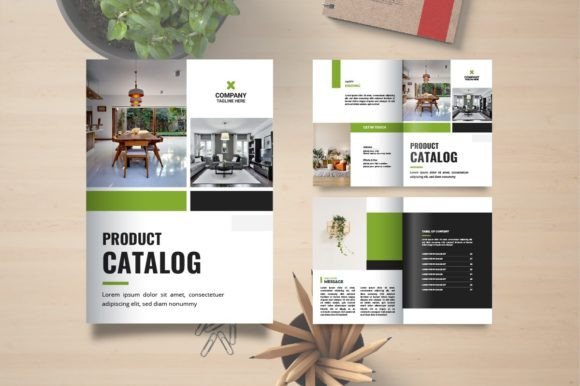
Designing a Powerful Business Product Catalog Brochure Layout
When you’re tasked with showcasing a range of products or services, the structure of your presentation is just as critical as the content itself. A well-organized Business Product Catalog Brochure Layout serves as the backbone of your sales strategy. It’s not just about listing items; it’s about guiding the viewer’s eye, building trust, and making the decision-making process effortless. Whether you are in agriculture, real estate, or general retail, a solid layout transforms a simple list into a persuasive sales tool.
The Anatomy of a High-Performing Corporate Brochure
A successful design template does more than just hold images. It establishes a visual hierarchy that prioritizes information. For a corporate business or a property selling company, clarity is paramount. The layout needs to balance white space with content density. If you are selling land or homes, high-resolution imagery needs to breathe, allowing potential buyers to visualize the property without distraction. In contrast, an agricultural company might need dense information blocks for technical specifications, requiring a grid system that organizes data efficiently.
The versatility of a modern Business Product Catalog Brochure Layout lies in its adaptability. A good template features a modular design. This means you can swap out sections depending on whether you are launching a new product line or updating pricing. Look for layouts that offer consistent margins and alignment guides. These invisible lines ensure that even if the content changes, the professional aesthetic remains intact. This consistency is vital for building a recognizable brand identity across multiple print runs or digital issues.
Visual Style and Customization
When selecting a Company product catalogue design template, the "personality" of the design should match your industry. A modern tech startup might prefer a layout with sharp angles and bold typography, while a home sale brochure might use softer corners and warmer tones to evoke comfort. The goal is to choose a template that feels native to your field but flexible enough to be unique to your brand.
Customization is where a template proves its worth. You will often work with specific brand colors—RGB for digital screens and CMYK for print. A high-quality EPS file, usually set at 300 DPI for sharpness, allows you to edit these elements without losing resolution. This is crucial when you need to match the exact hex code of your company logo or adjust the contrast of product photos. Furthermore, utilizing free fonts included in many templates helps maintain a cohesive look without additional licensing costs, though you should always verify the usage rights for commercial distribution.
Practical Applications Across Industries
The utility of a robust catalog design extends far beyond a simple price list. Here is how different sectors can leverage these layouts:
- Real Estate and Property: For home and land sales, the layout acts as a visual tour. Large image placeholders are essential. The text should focus on benefits and features, using bullet points for easy scanning. The hierarchy should lead the eye from the hero shot of the property to the key stats (beds, baths, acreage) and finally to the call to action.
- Agricultural Companies: This sector often deals with technical data. A layout with dedicated columns for specifications, usage instructions, and safety data is invaluable. The design should be clean and functional, prioritizing readability over flashy graphics to ensure that farmers and distributors can find the information they need quickly.
- Corporate Services: For service-based businesses, the catalog often resembles a magazine or lookbook. Here, the layout supports storytelling. You can use the space to include case studies, testimonials, and process diagrams. The goal is to build authority and trust through a polished, professional presentation.
Technical Considerations for Designers and Entrepreneurs
If you are the one executing the design, pay close attention to the file format. An EPS file is industry standard for vector graphics because it is scalable. You can resize elements without pixelation, which is perfect for printing large format posters or small flyers from the same master file.
However, software compatibility is a hurdle to watch out for. While EPS is widely supported, newer designers might prefer editable PDF or Adobe InDesign (INDD) files for easier text manipulation. When working with a template, always perform a "preflight" check. This involves ensuring all fonts are embedded or converted to outlines and that all images are linked correctly. A missing font can break your entire layout, turning a professional brochure into a chaotic mess of default text.
Elevating Your Brand with a Company Product Catalogue Design Template
Ultimately, a Company product catalogue design template is an investment in your brand’s perception. It signals to your customers that you value organization and professionalism. A cluttered, amateurish catalog can subconsciously suggest that your business operations are equally chaotic. Conversely, a sleek, well-structured layout implies reliability and quality.
For small business owners and entrepreneurs, using a pre-designed template is a smart shortcut. It allows you to bypass the steep learning curve of layout design and focus on what you do best—curating your products and writing compelling copy. By selecting a layout that aligns with your industry’s visual language and ensuring it is technically sound for both print and digital distribution, you create a marketing asset that works hard for your business long after it is published.